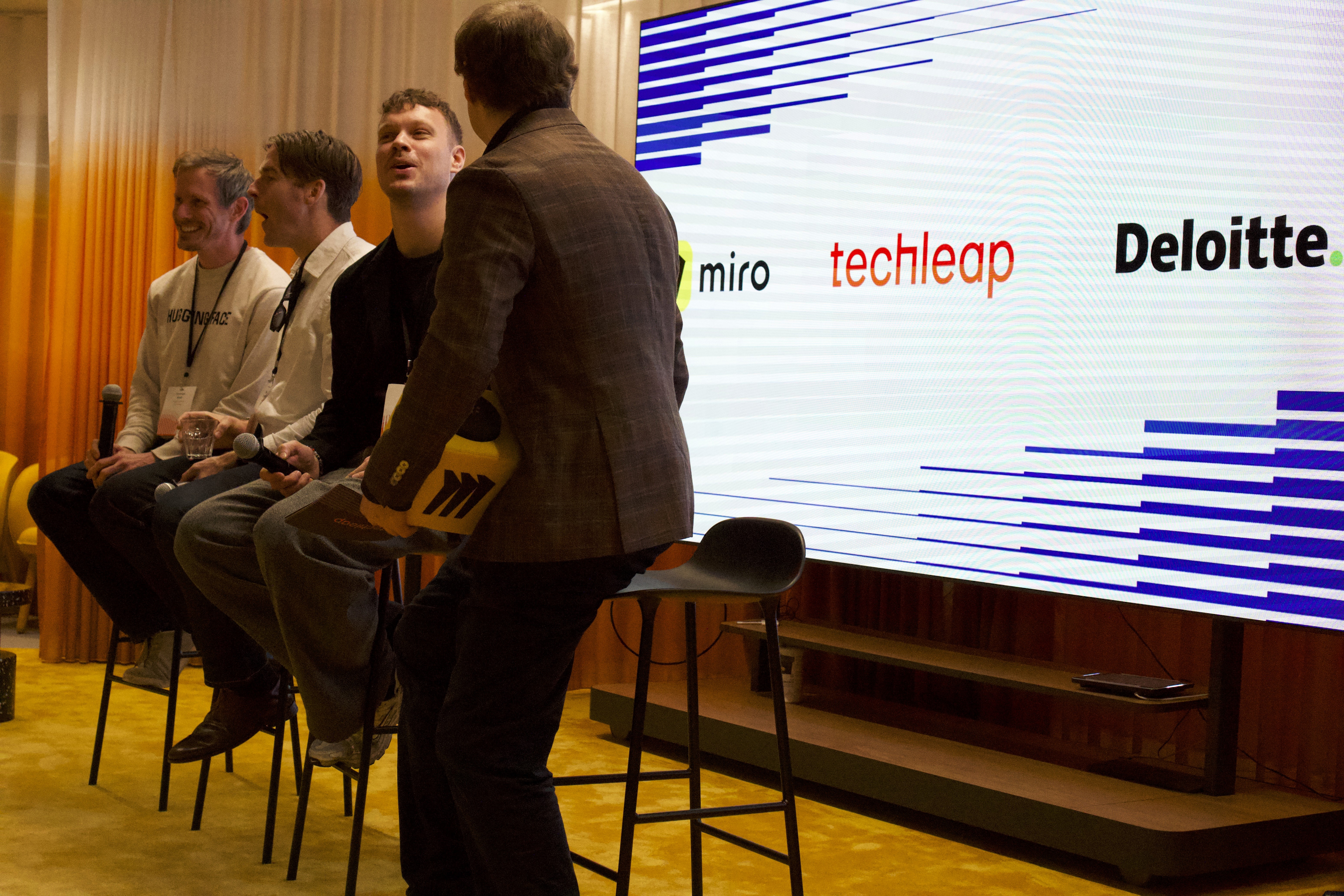

On December 10th, 2025, something unusual happened in Amsterdam. We put the founders from Europe's leading AI companies—Sana, Intercom, JetBrains, Hugging Face, Weaviate, n8n, Synthesia, and Miro—in a room with CxOs from major enterprises.
No keynotes. No demos. Just five roundtable discussions about the messy reality of AI transformation.
The conversations were frank, tactical, and occasionally uncomfortable. This is what we learned.
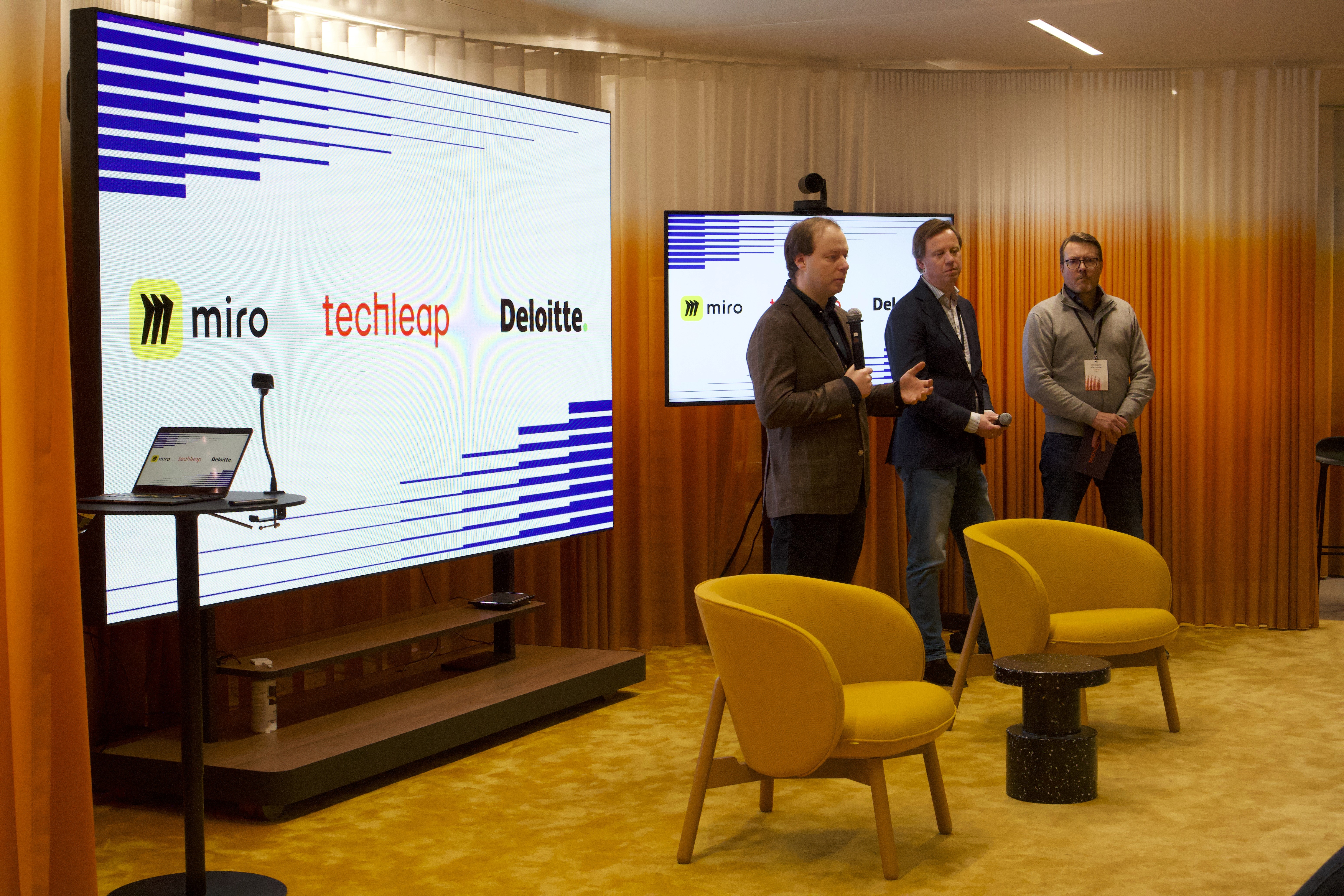
The AI Adoption Gap Is Real—And Solvable
The most striking tension in the room? Founders are building transformative AI products. Enterprises want to buy them. But they're often speaking different languages about value, implementation, and change management.
Here's what the founders told the CxOs about making AI adoption actually work:
1. Stop Talking About "AI Transformation."
The insight: Enterprises get stuck because they frame AI as a transformation initiative—which triggers organizational antibodies, endless planning cycles, and fears of disruption.
What works instead: Focus conversations on cost savings and revenue generation. Measure tangible value. When clients see concrete ROI rather than abstract transformation, they engage faster and onboard more quickly.
As one founder put it: "Don't sell them AI. Sell them what AI does for their P&L."
2. Leadership Ownership Is Non-Negotiable
The insight: Grassroots innovation is great, but it doesn't scale without top-down strategic direction.
What works instead: CEO ownership of AI priorities. Clear leadership statements about which use cases matter and why. A willingness to experiment paired with strategic focus on what delivers unique competitive value.
The gap between "people using ChatGPT on the side" and "AI as organizational capability" requires executive commitment. There's no way around it.
3. Perfect Is the Enemy of Done
The insight: Enterprises wait for perfect processes before starting AI initiatives. They never come.
What works instead: Embrace an experimental mindset. Start without waiting for everything to be figured out. Distinguish clearly between R&D experimentation and production delivery—but don't let the pursuit of perfect process prevent you from learning.
Multiple founders emphasized: "The companies winning with AI are the ones who started messy and learned fast."
4. Legacy Systems Are the Real Blocker
The insight: Most enterprise AI failures aren't about the AI. They're about systems built 15 years ago that weren't designed for modern data flows, APIs, or agent interactions.
What works instead: Honest assessment of what needs to be reduced, replaced, or retired. Not every system can be "integrated with" or "wrapped." Sometimes you need to redesign from scratch.
This was the most uncomfortable part of the conversation—and also where CxOs leaned in most. They know this is true. They need permission and partnership to act on it.
5. The HR Conversation Can't Wait
The insight: AI adoption means role transformation and, yes, some role elimination. Pretending otherwise creates organizational anxiety and slows adoption.
What works instead: Clarity about which roles will evolve and which will become obsolete. Early collaboration with internal change agents. Honest communication about transition timelines.
One CxO said it bluntly: "We're not replacing people with AI. We're replacing people who don't use AI with people who do."
6. Design for Agent Dynamics Now
The insight: Enterprise AI isn't just about humans using AI tools. It's about human-agent, agent-agent, and agent-human interactions—and most organizations haven't designed operations for this.
What works instead: Intentional decisions about operational models. Which workflows are fully autonomous? Which require human oversight? How do agents escalate to humans when needed? These aren't technical questions; they're organizational design questions.
7. Co-Design, Don't Just Deploy
The insight: Buying an AI product and deploying it rarely works. The most successful implementations involve rethinking the workflow with the vendor.
What works instead: Workshops. Visualization exercises. Co-designing the future state rather than retrofitting AI into existing processes.
As one founder noted: "Our best customers are the ones who treat us as design partners, not vendors."
What Founders Are Learning About Their Own AI Transformation
The conversation wasn't one-directional. The CxOs had hard questions for the founders about how AI companies themselves are navigating the same changes they're selling to clients.
Here's what emerged:
1. Hire for Agility, Not Tasks
The challenge: Traditional hiring focuses on task-based skills. But in an AI-accelerated environment, those tasks change every six months.
What's working: Prioritizing cognitive agility and adaptability over specific technical skills. Building teams that adapt to change rather than teams optimized for today's workflow.
One founder admitted: "We've completely rethought our hiring criteria. We're looking for people who learn fast, not people who already know exactly what we're doing."
2. The Apprenticeship Crisis Is Real
The challenge: AI is compressing or eliminating many entry-level roles—the traditional path to expertise.
What's at stake: How do you cultivate the next generation of skilled labor when the traditional progression from junior to senior roles is disrupted?
This was an unresolved tension in the room. No one has solved it yet. But ignoring it risks creating a skills gap that hurts everyone.
3. Train Your AI Like a Senior Employee
The breakthrough insight: Many companies over-constrain their AI models, treating them like junior employees who need step-by-step instructions.
What works better: Training models as you would train senior employees—with context, judgment, and problem-solving latitude. This increases model resilience and adaptability across different business scenarios.
As one technical founder put it: "Stop writing prompts like you're delegating to an intern. Write them like you're delegating to your best VP."
What Made This Different
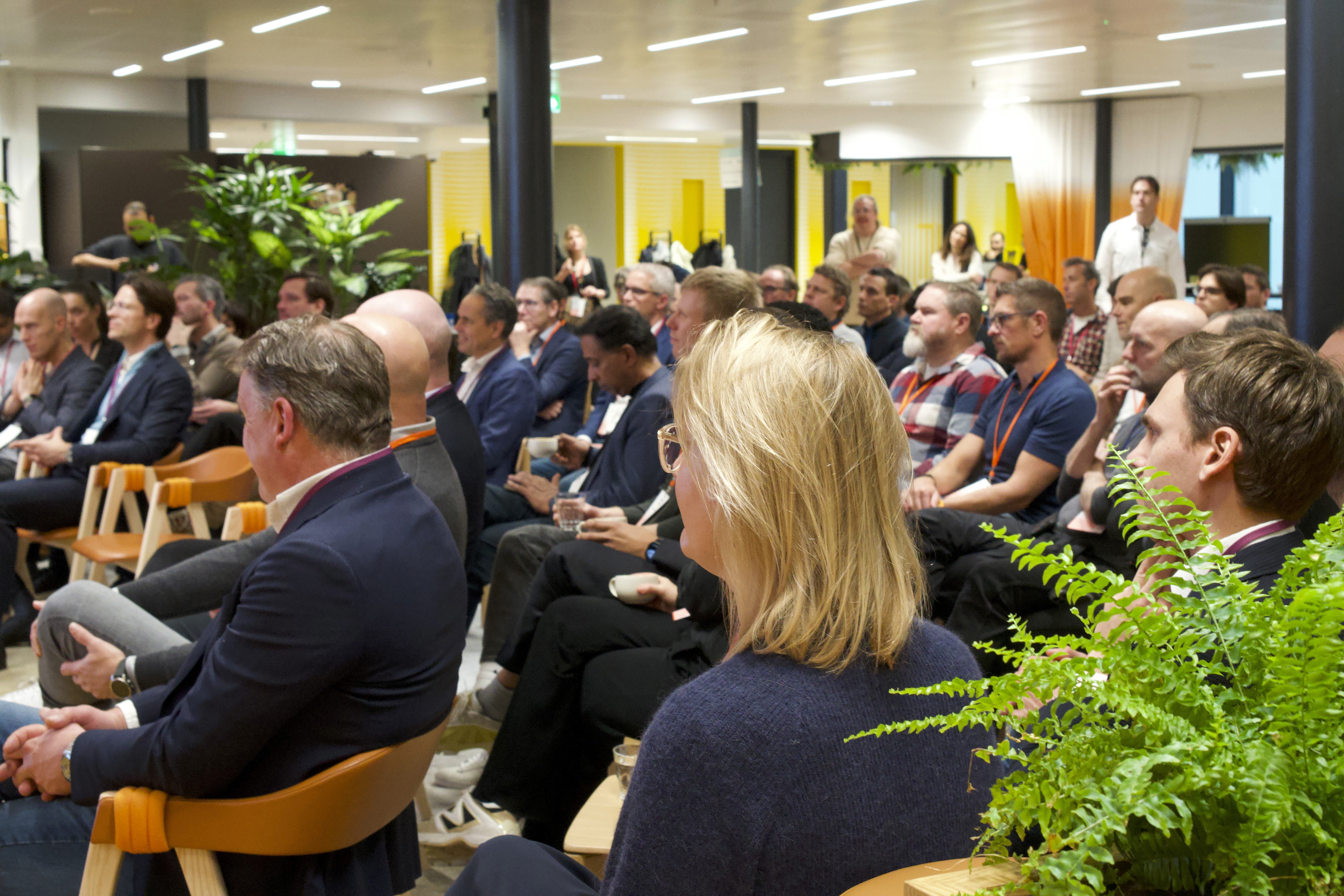
This wasn't a pitch session or a demo day. It was an honest conversation between people trying to figure out the same hard problems from different sides.
The founders weren't selling. The CxOs weren't evaluating. They were learning from each other about what actually works when you're trying to integrate AI at scale.
Some key themes kept surfacing:
Speed matters more than perfection. The companies making progress are the ones who started before they felt ready.
Organizational design is harder than technology. The technical problems are mostly solved. The human and process problems are where things get stuck.
Co-creation beats deployment. The best outcomes happen when enterprises and AI companies redesign workflows together rather than just buying and implementing tools.
Honesty accelerates progress. The most productive conversations happened when both sides dropped the sales/buying dynamic and just talked about what was hard.
Why This Matters
AI isn't a distant future anymore. It's reshaping how companies operate—right now. The gap between "we're experimenting with AI" and "AI is core to how we operate" is where most enterprises are stuck.
These conversations showed that closing that gap requires more than better technology. It requires different conversations, different partnerships, and different organizational mindsets.
The founders building AI products need to understand the organizational realities of enterprise adoption. The enterprises adopting AI need to understand what it takes to actually integrate these capabilities into operations.
When those two groups get in a room and have honest conversations—without the polish of marketing or the distance of a stage—real learning happens.
What's Next
These aren't one-time insights. They're ongoing challenges that will evolve as AI capabilities advance and adoption accelerates.
Techleap will continue creating spaces where founders and enterprise leaders can have these unfiltered conversations. Because the companies that figure out AI adoption—whether they're selling it or implementing it—will be the ones who learned from each other's hard-won experience.
The future isn't built in keynotes. It's built in rooms like yesterday's—where people who are actually doing the work share what they're learning as they figure it out.
About the Event:
Techleap's Winter Gathering brought together founders from Sana, Intercom, JetBrains, Hugging Face, Weaviate, n8n, Synthesia, and Miro with CxOs from major European enterprises for five roundtable discussions on AI adoption and transformation. The event was hosted in partnership with Miro and Deloitte.
Want to join future conversations?
Get a Connect Membership or contact scale@techleap.nl for more information.
By Nadia Gómez, Head of Marketing and Communications at Techleap

Aug 13, 2023
Read more…
How Marleen Vogelaar has successfully scaled Ziel & Shapeways in the US

Aug 17, 2023
Read more…
12 things you should know about Adyen’s success with CEO Pieter van der Does

Aug 17, 2023
Read more…